Termites are one of the most misunderstood pests in Australia, and that misunderstanding costs homeowners dearly. The truth is that no home is automatically safe, and the consequences of getting it wrong can run into the tens of thousands of dollars.
This article busts the most common termite myths, starting with the biggest one of all: that building on a concrete slab protects you from termites.
Key Takeaways
- Concrete slabs do not prevent termite entry; they exploit cracks, joints, weep holes and service penetrations.
- Many “brick” homes are brick veneer, with vulnerable internal timber framing.
- Termite damage is usually hidden inside walls and can progress extensively before detection.
- Garden conditions, moisture, mulch, timber, and debris near the home significantly increase risk.
- Termites consume more than wood, including plasterboard, insulation, paper and furniture.
- Hardwood and treated timber are not termite-proof and should never be relied on as sole protection.
- DIY sprays can worsen infestations by dispersing colonies without eliminating the nest.
- New homes are not exempt; termite protection systems degrade or can be compromised over time.
What is the concrete slab termite myth?
The concrete slab termite myth is the belief that homes built on concrete slabs are immune to termite damage. After all, concrete isn’t wood, so termites can’t eat it. Unfortunately, this is false.
While termites and timber pests do not damage concrete itself, slabs do not prevent them from accessing a home. Many modern brick homes built on concrete slabs remain vulnerable if access points are present. Termites exploit small gaps, concealed entry points and construction details to bypass slabs and reach timber components within the home.
If you’re buying a home built on a concrete slab, a professional building and pest inspection is essential to confirm whether termites have gained, or could gain, access to the structure.
How termites access homes built on concrete slabs
Termites do not need direct soil-to-timber contact to enter a home. Instead, they exploit concealed or poorly protected entry points around the slab and walls.
Common access points include:
- Brick mortar joints where gaps or cracks allow entry
- Weep holes that are blocked or covered by soil, paving or garden beds
- Cracks in the concrete slab caused by movement or shrinkage
- Slab penetrations such as plumbing pipes, electrical conduits and expansion joints
Once inside, termites can reach concealed timber framing and cause damage that progresses undetected for years.
Many modern brick homes are brick veneer constructions, not solid masonry. The external brickwork is primarily cosmetic, while the structural strength comes from internal timber wall frames. In slab homes, this timber framing is often located close to ground level, making access easier once termites bypass the slab edge or wall cavity protections. Access is also more likely when the slab edge is concealed by foliage, paths, patios or paving.
Weep holes, which are designed to drain moisture and allow visual detection, must be kept clear and generally at least 75mm above ground level. When blocked or covered, they allow termites to enter wall cavities without being seen, enabling damage to progress unnoticed.

Myth: Termites Only Eat Wood
While wood is a primary target, termites consume anything containing cellulose, the organic compound found in plant-based materials. This means they can damage far more of your home than many owners expect.
Common materials termites will eat include:
- Paper and cardboard, including storage boxes in roof voids and garages
- Plasterboard and Gyprock wall linings
- Insulation batts made from cellulose-based materials
- Timber window frames, door frames and skirting boards
- Wooden furniture, flooring and decking
- Books, documents and stored paper materials
In slab homes, termites that enter wall cavities can begin feeding on plasterboard linings and internal framing without obvious exterior signs. Cracked or hollow-sounding walls are sometimes attributed to settling or moisture, when the internal structure has actually been hollowed out.
Myth: Termites Are the Same as White Ants
The terms “white ants” and termites are often used interchangeably, but this is a common misconception. White ants do not exist as a separate species. Any insect referred to this way is a termite.
The confusion comes from appearance. Termites are often pale beige or cream coloured, which can look white, but they differ from ants in several key ways:
- Termites have straight antennae; ants have bent antennae
- Termites have a broad waist; ants have a pinched waist
- Reproductive termites have four wings of equal length; flying ants have uneven wings
- Termites are generally lighter in colour, while ants are darker
This distinction matters because mistaking termites for ants can delay action. Ants are a nuisance, while termites can cause significant structural damage.
Myth: Termites in the Garden Won’t Affect Your Home
Seeing termite activity in the garden and assuming it will stay there is a dangerous mistake. A termite colony is constantly expanding. A nest with an active food source in your garden will not remain confined; it will extend foraging tunnels in all directions, including toward your home.
Common garden conditions that increase risk include:
- Timber retaining walls, sleepers or edging near the house
- Old tree stumps or roots left in the ground
- Firewood stacked against the home
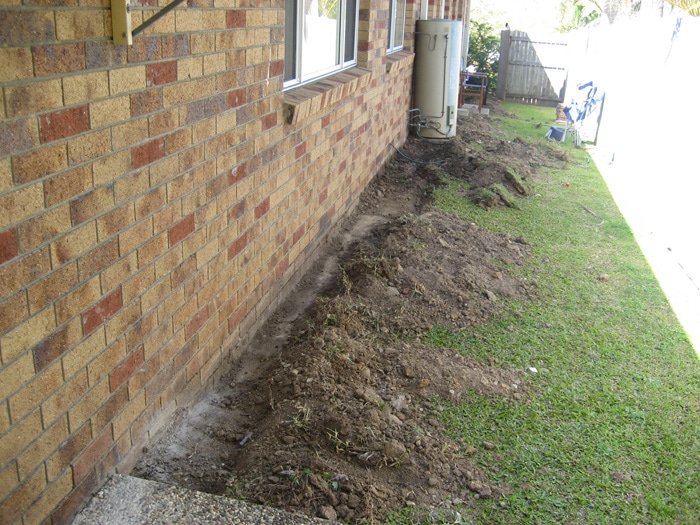
- Mulch or garden beds built up against the slab edge or brickwork
- Decaying timber fencing in contact with the ground
Removing these attractants helps reduce the risk of termite infestation, but if a nest is already established nearby, professional treatment may still be required.

Myth: Hardwood and Treated Timber Are Termite-Proof
Many homeowners believe hardwood or H2-treated timber makes a home safe from termites. This is only partially true.
Some species avoid certain hardwoods, but others do not. Australia is home to many termite species, including Coptotermes acinaciformis, which readily attacks a wide range of timbers and is one of the most destructive.
For treated timber:
- H2 treatment protects only in above-ground, protected applications
- The treated surface can weather or be damaged, exposing the untreated inner wood
- It is not a substitute for a termite barrier
- Higher treatments offer more protection but are only required in specific applications
The presence of hardwood or treated timber should not be relied on as the sole defence. Australian Standard AS 3660.1 requires a compliant termite management system regardless of timber type.
Myth: You Can Treat Termites Yourself With Spray
When homeowners discover termites, a common reaction is to reach for a can of insect spray, but this is one of the costliest mistakes you can make.
Visible termites represent only a small fraction of the colony. The main nest, containing the queen and thousands to millions of workers, is usually located underground or deep within a wall, tree or subfloor, well out of reach of surface sprays.
Spraying termites directly can cause the colony to fracture, forcing them to retreat and establish new access points elsewhere, which makes them harder to track and treat. Disrupting them without eliminating the nest creates a false sense of resolution while damage continues unseen.
Over-the-counter sprays rely on contact insecticides rather than the slow-acting, colony transfer agents used in professional treatments. These professional treatments are undetectable to termites and spread through the colony via contact and grooming, eventually eliminating the nest. Baiting systems work similarly.
If you suspect termites:
- Avoid disturbing the area
- Leave mud leads or galleries intact
- Contact a licensed pest inspector
A professional can identify the species, locate the nest and recommend the most effective termite treatment.
Myth: New Homes Don’t Need Termite Inspections
A common belief is that brand-new homes do not need inspections for several years, but this is not correct. New homes in Australia must have a compliant termite management system installed under AS 3660.1, which provides an initial level of protection.
However, this protection does not last indefinitely. Chemical soil barriers typically last 8 to 10 years under ideal conditions, and less where soil disturbance, landscaping or drainage issues occur. Physical barriers last longer but can still be breached by poor installation, soil bridging or later building works.
Changes around the home can also compromise these systems. Renovations, landscaping, paving or external structures can:
- Cover slab edges
- Create concealed access points
- Disrupt existing barriers
A termite management system certificate only reflects compliance at the time of installation, not ongoing protection.
For this reason, inspections are essential. AS 3660 recommends:
- At least annual inspections for most homes
- Every 6 to 12 months in high-risk areas such as tropical and subtropical regions
Even in newer homes, changes like landscaping or added structures, or simply time since the last inspection, can increase risk. Booking an inspection ensures any issues are identified early.
What inspectors check in concrete slab homes
During a building and pest inspection, inspectors assess whether a concrete slab home shows signs of termite risk, activity or damage. This typically includes checking:
- Slab edges and exposed perimeters
- Weep holes and brickwork clearances
- Concealed slab penetrations
- Garden beds, paving and paths built against walls
- Internal wall linings for signs of damage
- Evidence of previous termite treatments or barriers
Inspectors also identify conditions that may attract termites, even if no active infestation is found.
When our inspectors perform a pre-purchase property report, they assess termite access, activity and damage, and provide recommendations such as clearing blocked weep holes if you proceed with the purchase.
Regardless of whether you are buying an older timber home or a brick home on a concrete slab, a professional building and pest inspection is essential so you understand the condition of the property before committing.
If you would like a building and pest inspection in Sydney, contact us on 1300 337 447 or book online today.
Frequently Asked Questions
Can termites damage a home built on a concrete slab?
Yes. While termites cannot eat concrete, they can bypass slabs and access timber framing through cracks, joints, weep holes and service penetrations.
Are brick homes safe from termites?
No. Many brick homes are brick veneer with timber frames inside. If termites gain access, significant damage can occur without visible warning signs.
Do concrete slabs eliminate the need for a pest inspection?
No. Concrete slab homes still require regular pest inspections to identify termite access points, activity and conditions conducive to infestation.
What increases termite risk in slab homes?
Concealed slab edges, blocked weep holes, gardens or paving built against walls, moisture issues and poor drainage all increase termite risk.
