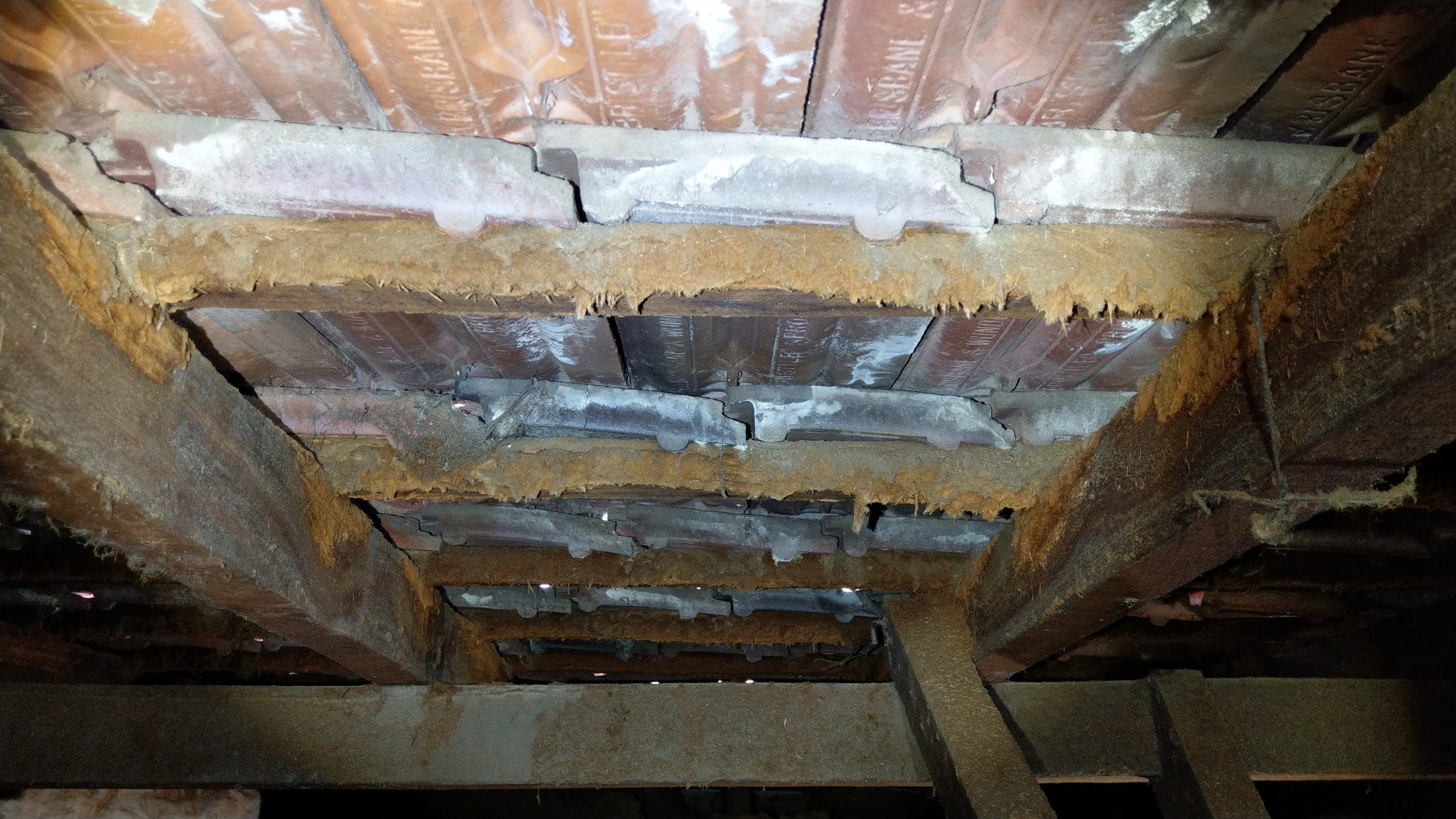
Chemical delignification is a form of timber decay that affects roof structures, particularly under terracotta tiled roofs. It occurs when salts (efflorescence) migrate from the tiles into the timber battens and rafters, breaking down the lignin – the natural “glue” that holds wood fibres together. Over time, the timber surface becomes soft and “hairy”, weakens structurally, and can eventually collapse if left untreated.
In Perth and other coastal or high-salt environments, chemical delignification is sometimes found in older terracotta roof systems. Understanding the cause, signs and treatment options is essential for homeowners, buyers and investors.
Before we explain in more depth what chemical delignification really is, we need to understand what products and conditions can lead up to this happening to the roof timber structure. So, let’s start from the beginning.
Key Takeaways
- Chemical delignification is a form of timber decay where salts and moisture attack the lignin in roof timbers, causing them to become soft, fibrous and weak.
- It is commonly associated with terracotta tiled roofs, especially in areas where salt and moisture can move through the tiles into the roof structure.
- Over time, chemical delignification can spread from battens to rafters, affecting the structural integrity of the roof and making it unsafe to walk on.
- Early signs include hairy timber surfaces, salt staining and fine fibres falling onto insulation or ceilings.
- If identified early, repairs may involve replacing affected timber and addressing moisture/salt sources; advanced cases may require more extensive roof restoration or tile replacement.
- A professional building inspection is the best way to detect chemical delignification and understand the level of risk in a property.
What is chemical delignification?
Chemical delignification is a chemical breakdown of timber caused by salts (efflorescence) that migrate from porous materials such as terracotta roof tiles into the roof timbers.
Here’s what happens in simple terms:
- Salts and moisture move from the terracotta tiles into the timber battens and rafters.
- The salt-laden moisture travels through the timber and then dries.
- As the salt crystallises, it attacks the lignin – the natural organic “glue” that binds the wood fibres together.
- Over time, the lignin is destroyed and the wood becomes soft, fibrous and “hairy” on the surface.
When timber is affected by chemical delignification, it gradually loses strength and stiffness. The affected surfaces can crumble or fall away like fine fibres or dust, and the damage can spread along the battens and rafters if the source is not addressed.
The timber species, size, exposure and environment all influence how quickly this process progresses and how extensively it spreads through the roof structure.
Understanding the cause
The source of chemical delignification is the efflorescence bleeding from the terracotta roof tiles onto and through the veins of the timber elements that the tile is affixed to.
The timber may not be able to support the amount of salt entering the timber and the efflorescence starts to reveal itself like white veins running over the woods.

Where does the efflorescence (salt) come from?
The salt can appear naturally in timber if the property is near the ocean, or it can occur from the ground. Salt can also be produced from industries or manufactured from products such as mortar, clay bricks and terracotta tiles.
Terracotta, which literally means ‘baked earth’ in Italian, is made from a natural material that has been used in a wide range of applications throughout history, including pottery and architecture. It is made from fired clay, resulting in a red-brown tone that is warm and natural.
The clay roof tiles may have a finish of a matte or glossy glaze. Because the terracotta tile is made of natural material that includes salt, over time the matte or glossy glaze slowly loses it productive coating. This allows water and possible other salts to penetrate the porous tile product.
What happens to the terracotta tile over time?
A fairly common problem with terracotta roof tiles in Perth is called ‘fretting’.
Fretting to the terracotta roof tile has various causes and salt is one common culprit. However, some brand and production lines of roof tiles seem to suffer a lot more than others. Some very old terracotta roof tiles do not fret at all – yet younger tiles do.
Various terracotta roofs near the sea suffer bad fretting, while others fair quite well. Salt is also a decaying component of various masonry materials like stone, brick and mortar, by soluble salts forming crystals within the pores of the material.
There needs to be an accumulation of sufficient amount of salts to cause major decay to the terracotta tiles over time.
Only once the efflorescence concentrations are high enough, the salt crystals grow and cause disruption to the tile. It then decays by fretting and loose surface skins is produced.
The underside surface of the terracotta tile (noticeable in the roof void) is normally laden with additional salt that has been forced through the tile from a mixture of both water and salt.
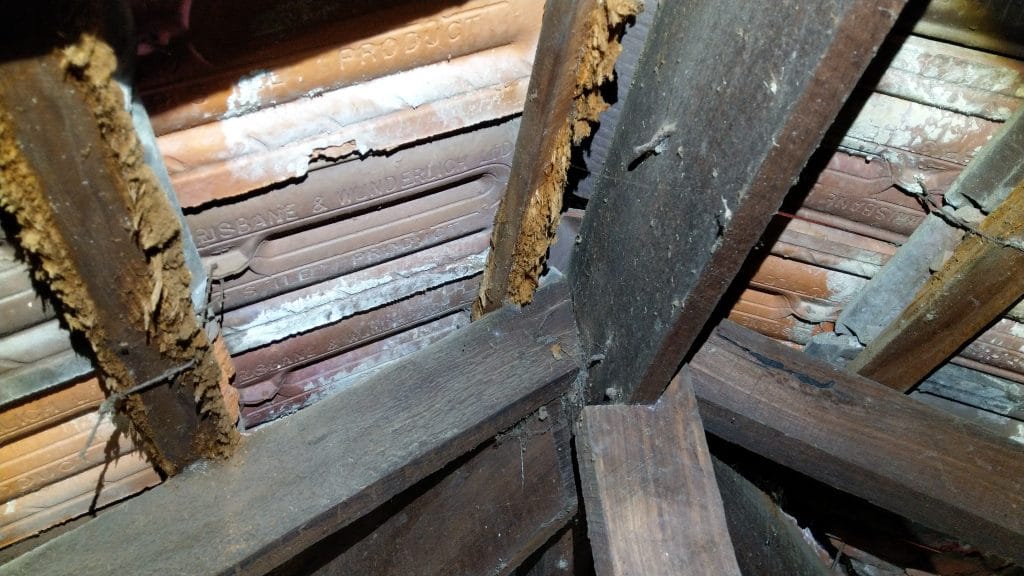
Signs of chemical delignification
How can I tell if chemical delignification is present?
Chemical delignification is usually identified from within the roof void during a building inspection. Common signs include:
- “Hairy” timber surfaces on battens or rafters, where the wood fibre appears fluffy or fibrous
- Fine fibres or dust dropping from roof timbers onto insulation or ceilings
- Visible white efflorescence (salts) on the underside of terracotta tiles or along timber veins
- Localised areas of timber that feel soft or weakened when probed by an inspector
These signs can be confused with other forms of timber decay, so it’s important to have any suspected chemical delignification assessed by a qualified building inspector or timber specialist.
Outcome of the Chemical Delignification to the roof structure
If chemical delignification is detected early, it can be treated by a professional roof restoration company and it may be possible to manage the problem by:
- Treating or replacing affected battens
- Improving roof ventilation and drainage
- Addressing the source of salts and moisture (often the terracotta tiles)
However, if the process is advanced, the damage to the timber can be severe and widespread:
- Battens can become unsafe to walk on, posing a risk to anyone accessing the roof
- Fibrous timber “dust” can fall onto insulation or the back of the ceiling linings
- The decay can spread from battens into rafters and other structural members
In some cases, it may not be enough to replace only the battens and rafters. Where the terracotta tiles are a significant source of salt and moisture, a more extensive roof restoration or tile replacement may be required.
Because the visual signs can be subtle in early stages, professional inspection is essential to assess the extent of the damage and recommend appropriate repairs.
Chemical delignification will spread rapidly over the structural elements of the battens and onto the rafters and should be stopped in its tracks when identified. The battens are the first to be struck by the efflorescence to a point where it will be unsafe to walk on a roof. The question to ask is: are the ‘Terracotta Tiles’ responsible for the efflorescence causing chemical delignification or is it caused by natural events? It may not be enough to just treat or replace the battens and/or rafters in some situations, but to replace the roof tiles additionally.
Our professional building inspectors in Perth are experts at identifying timber delignification in Perth properties.
Call 1300 337 447 today or book your inspection online.
Our detailed building inspection report will provide you with an honest assessment of the property’s condition and value.
Frequently Asked Questions
Is chemical delignification dangerous?
Yes. Chemical delignification weakens roof timbers over time. In advanced cases, battens and rafters can lose significant strength, making the roof structure unsafe to walk on and potentially compromising its structural integrity.
Which roofs are most at risk of chemical delignification?
It is most commonly seen under terracotta tiled roofs, especially where tiles are porous, fretting or heavily affected by salts and moisture. Coastal environments or areas with high salt exposure may be more prone.
Can chemical delignification be repaired?
In many cases, affected timbers can be replaced or reinforced, and the source of moisture and salts can be managed. However, if damage is widespread, more extensive roof restoration or tile replacement may be needed.
How is chemical delignification identified?
It is usually identified during a roof void inspection by a qualified inspector. They look for “hairy” timber surfaces, salt staining, fibrous dust and areas of weakened wood.
Should I get a building inspection if I’m buying a home with a terracotta roof?
Yes. A pre-purchase building inspection can help detect issues such as chemical delignification, fretting tiles and other roof defects, allowing you to make an informed decision before you buy.
