Why Does Brisbane’s Property Boom Make a Building Inspection More Important?
Because competition and rapid price growth are exactly the conditions that tempt buyers to skip due diligence. That is when an inspection matters most. A building and pest inspection helps you avoid costly surprises and gives you the confidence to proceed, or the information to negotiate.
Key Takeaways
- ANZ Research forecasts Brisbane to grow 9.7% in 2026, on top of house prices already sitting 37% above the national average since the 2021 Olympic announcement.
- Supply is genuinely tight: CBRE forecasts only around 3,100 new inner-city dwellings a year through to 2031, with vacancy rates hovering near 1%.
- The $7.1 billion Games infrastructure program, alongside population growth of 2.3% in the year to June 2024, is fuelling buyer interest in suburbs like Woolloongabba, Spring Hill and Bowen Hills.
- A hot market is exactly when buyers are most likely to waive conditions, which is when an inspection matters most. Defects don’t disappear; they just become your problem at an inflated price.
- New builds and off-the-plan purchases in the Olympic construction pipeline aren’t automatically defect-free either. A handover inspection matters here just as much as a standard inspection does on an established home.
There’s a lot of excitement around Brisbane’s property market right now. But competitive markets also create pressure for buyers to move quickly and sometimes cut corners on due diligence.
When you’re competing for a property, an inspection can feel like another hurdle. In our experience, it’s often what gives buyers the clarity they need to make the right decision.
Brisbane’s Property Boom: What’s Driving It
Brisbane’s property market has been moving quickly, and the figures help explain why. Brisbane is forecast to grow 9.7% in 2026, while house prices are already sitting around 37% above the national average since the city won the Olympic bid in 2021.
Population growth is a big part of why. Queensland’s population grew 2.3% in the year to June 2024, most of it landing in Greater Brisbane, while only around 3,100 new inner-city dwellings are expected each year through to 2031. Put simply: more people, not enough new homes, and vacancy rates have sat near 1% for a while now.
Add a decade of major infrastructure projects, including Cross River Rail, Brisbane Metro, Queen’s Wharf and airport expansion, and it’s not hard to see why buyer activity has remained strong. We’ll leave the investment commentary to the analysts. What we see from inspections across Brisbane every week is that this is a genuinely active market, and competitive markets change how buyers make decisions.
The Olympic Effect: Which Suburbs Are Seeing the Most Activity?
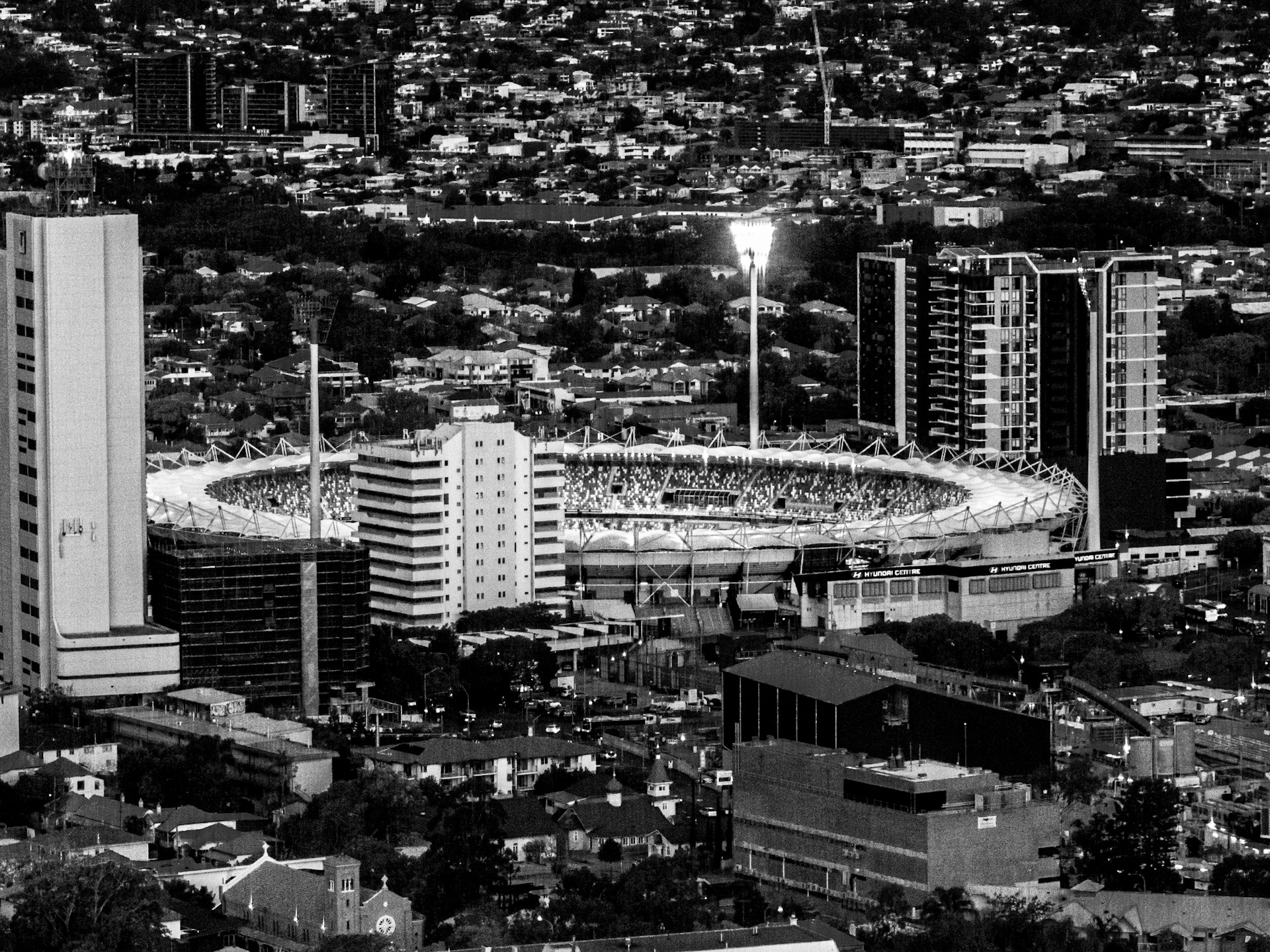
The $7.1 billion Games infrastructure program includes a new major stadium at Victoria Park, the National Aquatic Centre at Spring Hill, the Athletes Village at Bowen Hills, and Cross River Rail threading much of it together. That’s a significant amount of construction activity spread across the city, rather than being concentrated in one location.
We’re conducting inspections across Brisbane’s busiest growth suburbs regularly, including Woolloongabba, Spring Hill, Herston, Bowen Hills, Fortitude Valley, Kangaroo Point and East Brisbane. Properties close to Cross River Rail stations at Woolloongabba, Albert Street, Boggo Road and Roma Street are seeing plenty of buyer interest, with Woolloongabba especially well positioned given how close it sits to the Olympic precinct. The ripple effect reaches further out too, extending north into Moreton Bay and the Sunshine Coast, and south towards Redlands and the Gold Coast, all of which have their own Games infrastructure.
We’ll say this plainly: none of this is a recommendation to buy in any particular suburb. It’s context. Where there’s construction activity and buyer interest, there’s also more reason to have a property properly inspected before you commit, not less.
Why a Hot Market Is Exactly When You Need an Inspection
In a competitive market, the pressure to waive conditions and move fast is real. We understand why buyers do it. But this is Brisbane, where a significant share of the housing stock is older. Queenslanders on stumps, post-war brick homes and properties built well before current standards can all have age-related defects, even when they present beautifully. A pre-purchase building inspection is one of the most important steps in the process because it tells you what you’re actually buying, rather than what the listing photos suggest.
Many of the homes changing hands in Brisbane’s inner and middle-ring suburbs were built decades ago, and they don’t always show it. A beautifully renovated Queenslander can look immaculate from the street while concealing movement beneath the home, timber deterioration or ageing stumps, and early brick homes can conceal termite damage, roof defects or alterations completed without the required approvals. None of this is necessarily a dealbreaker. It’s exactly the kind of thing worth understanding before you commit, not after.
The cost of skipping an inspection isn’t the inspection fee you save. It’s the cost of discovering a problem after you’ve settled, often at a price that already reflects a competitive market. Undiscovered defects don’t disappear just because the market’s hot; you inherit them anyway, and you’ve lost the leverage you’d have had before signing.
What About New Builds and Olympic-Adjacent Developments?
The Olympic boom isn’t only influencing established homes. It’s also increasing interest in new apartments and off-the-plan developments, which means plenty of buyers are looking at construction quality for the first time.
It’s worth being clear: a new build is not automatically defect-free. Construction quality varies, especially during periods of high demand and labour shortages, and Queensland construction costs, particularly for residential builds, have risen significantly over the past five years, which puts real pressure on builder margins.
This is where a handover inspection comes in. It’s an independent inspection carried out at practical completion, before you accept the keys, checking workmanship and finishes against what was actually approved rather than relying on appearance alone.
If you’re buying into the Athletes Village at Bowen Hills once it converts to residential apartments post-Games, or any other new development in the Olympic pipeline, we’d treat it like any other new build and recommend an independent handover inspection before you settle.
What Does a Building and Pest Inspection in Brisbane Cover?
A thorough inspection covers the structure, roof cavity, subfloor, visible electrical and plumbing elements, moisture issues, and pest activity, all in the one visit. In Brisbane, that often means:
- Checking older Queenslanders for deteriorated stumps and movement beneath the home.
- Looking for roof leaks after heavy rainfall.
- Assessing drainage on clay-heavy soils.
- Inspecting ageing retaining walls.
- Identifying DIY renovations that may never have been properly completed or approved.
In South East Queensland, building and pest inspections go hand in hand. Termite pressure across Brisbane stays high year-round, so a building inspection without a pest check leaves a real gap in the picture.
What you get at the end is a written report in plain language, with photos included, so you’re not left trying to decode jargon under time pressure.
We cover Brisbane and Greater SEQ, and our inspectors know these growth suburbs well. We’ve been carrying out independent building and pest inspections across Brisbane and South East Queensland since 1995, and reports are typically delivered within 24 hours of the inspection. Whether you need a building and pest inspection Brisbane buyers rely on, a pre-purchase building inspection, or a handover inspection for a new build, we can help.
Book Your Inspection Today!
Brisbane’s market rewards buyers who move quickly, but it rewards prepared buyers more. A good inspection report gives you the information you need to move forward with confidence. Call us on 1300 337 447 to arrange an inspection, or simply book an inspection online today.
Frequently Asked Questions
Do I still need a building inspection if I’m buying in a competitive market where unconditional offers are becoming more common?
Yes, if anything, it matters more. You can still arrange a pre-offer inspection in many cases, or negotiate a short conditional period even in a competitive listing. Ask your agent or conveyancer what’s possible before you assume conditions are off the table entirely.
How long does a building and pest inspection take in Brisbane?
The inspection itself typically takes a few hours depending on the size of the property. Reports are delivered within 24 hours.
Can a building inspection be used to negotiate the purchase price?
Yes, a documented report is commonly used as the basis for renegotiating price or requesting repairs before settlement. We’re not able to advise on negotiation strategy itself, but the report gives you and your conveyancer something factual to work with.
What’s the difference between a building inspection and a pest inspection? Do I need both?
A building inspection covers structural and construction issues, while a pest inspection checks for termite activity and damage. In SEQ, where termite pressure is high year-round, we’d recommend both, usually combined into a single visit.
How soon can I get an inspection booked in Brisbane?
It depends on demand at the time, but we work to move quickly, particularly for buyers on a tight contract timeline. Call us to check current availability.
Which Brisbane suburbs are seeing the most inspection activity ahead of the Olympics?
Mostly the pockets closest to Games venues and the new Cross River Rail stations, inner and near-city suburbs like Woolloongabba and Bowen Hills in particular, along with the surrounding growth areas.
What happens if the inspection finds serious issues in a hot market? Do I have to walk away?
Not necessarily. Depending on your contract terms, you may be able to negotiate repairs or a price adjustment, request an extension, or in some cases walk away if conditions allow it. What you do with the findings is your call; our job is making sure you’re deciding with full information rather than none.
